|

(Printable Version)
Our Free Clinics provide a variety of health care services to our clients, including:
Medical Services
Watch the Medical Clinic video
Dental Services
Overview
Samaritan House operates two highly recognized Free Clinics,
one at 19 W. 39th Ave., San Mateo, and one at 114 5th Ave., Redwood City. Each provides primary and specialty medical
and dental services to uninsured, low-income residents.
The two Clinics employ only eight staff
members, yet provide over 9,000 patient visits each year.
Who is Treated
Patients of our clinics are the working poor. They tend to earn
just enough income to be ineligible for Medi-Cal coverage, yet do
not receive health insurance through their employers and cannot
afford to pay for “out-of-pocket” health insurance.
Often these residents are forced to seek treatment at local emergency
rooms and become saddled with medical bills that they are unable
to pay. Samaritan House’s Free Medical Clinics fill this gap
in healthcare access for the uninsured and save emergency room resources
for emergencies.
Professional
Volunteers
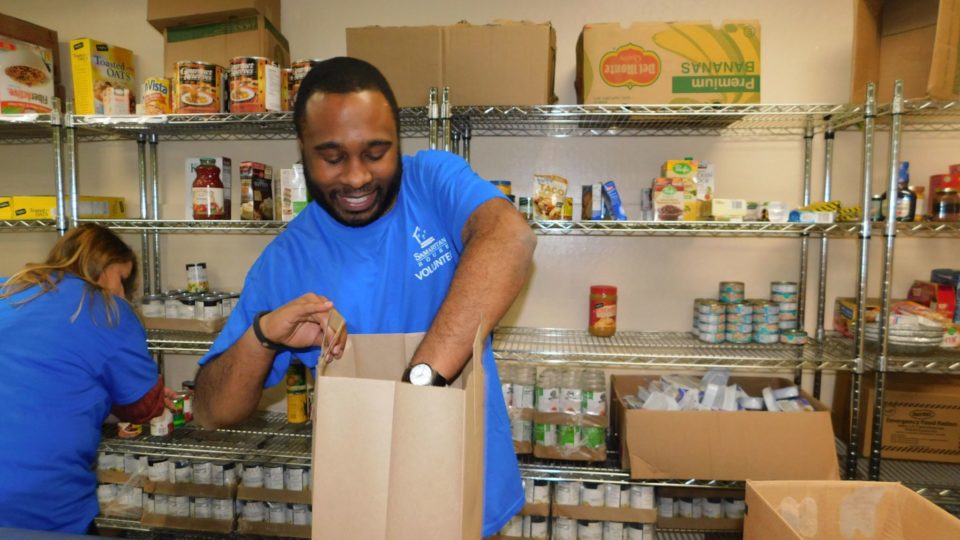
Thanks to its innovative volunteer-based model of service, Samaritan
House’s clinics are able to treat such a large number of patients
with a very small paid staff. Almost all of the medical professionals
working at Samaritan House’s Clinics are volunteering their
time free of charge. These doctors are retired or currently practicing
medicine and want to serve their community in their limited spare
time. Many doctors look forward to volunteering because it allows
them to escape the bureaucracy of managed healthcare and allows
them to practice what they deem to be “pure medicine”.
Medical Services Offered
Specialty services offered at one or both of our Free Clinics include
dentistry, gynecology, breast cancer screenings, dermatology, diabetic
care, endocrinology, internal medicine, neurology, orthopedics, ophthalmology, optometry, podiatry,
pulmonology, nutritional counseling,
psychology, and psychiatry.
Patients
who require specialty care not offered at the clinics are referred
to other doctors in the community who generously volunteer their
services to our patients. We also receive significant financial
support from Peninsula Healthcare District, the Sequoia Healthcare
District and the Peninsula Community Foundation each year. Mills
Peninsula Health Services and Sequoia Hospital donate laboratory
tests, x-rays, cardiology and neurology studies when needed. Thanks
to the contributions of these hospitals and volunteer medical professionals,
Samaritan House provides access to comprehensive healthcare to thousands
of community members who may otherwise be shut out of the traditional
healthcare system.
Dental Services Offered
The Dental Program was established in 1998 and has since expanded tremendously. Dental Clinic services include fillings, cleanings, extractions, and root canals. With the guidance of a part-time Dental Director, a small paid staff, and countless volunteers, we are able to provide professional dental care to low-income families.
Sharing the Secret of Compassionate
Care
Samaritan House periodically provides tours to national and international
professionals studying the success of the Medical Clinic model.
Another service that our Free Clinics provide to the community is
the opportunity for medical students and residents from UCSF and other Bay Area schools to engage in the Free Clinic experience.
This helps foster a new generation of socially-minded physicians
and leaders.
National,
International Recognition
Samaritan House has been providing free medical care since 1992
and has been recognized for this forward-thinking Free Clinic model
in national print and broadcast media. Articles have been published
in Modern Maturity, Parade Magazine, and the front
cover of The New York Times. The clinics have been featured
on ABC’s Evening News with Peter Jennings, PBS’s
California Connected, and CNN’s Democracy in America.
Back to top.
|
 |
| 49% of
low-income residents in San Mateo County do not receive health
insurance through their employer.
26% of low-income residents can not afford medication.
|

|